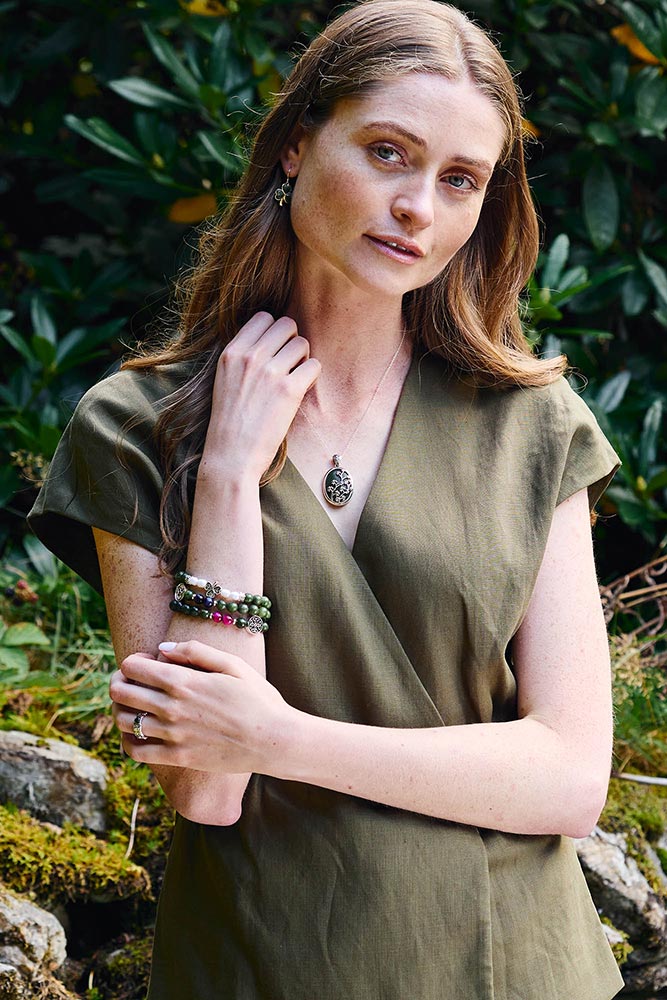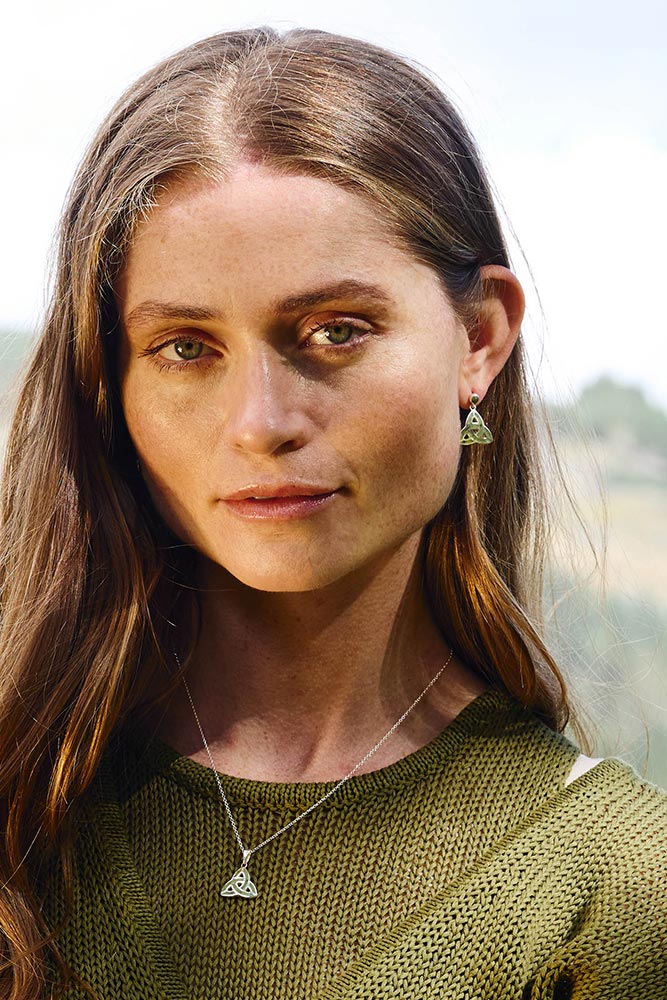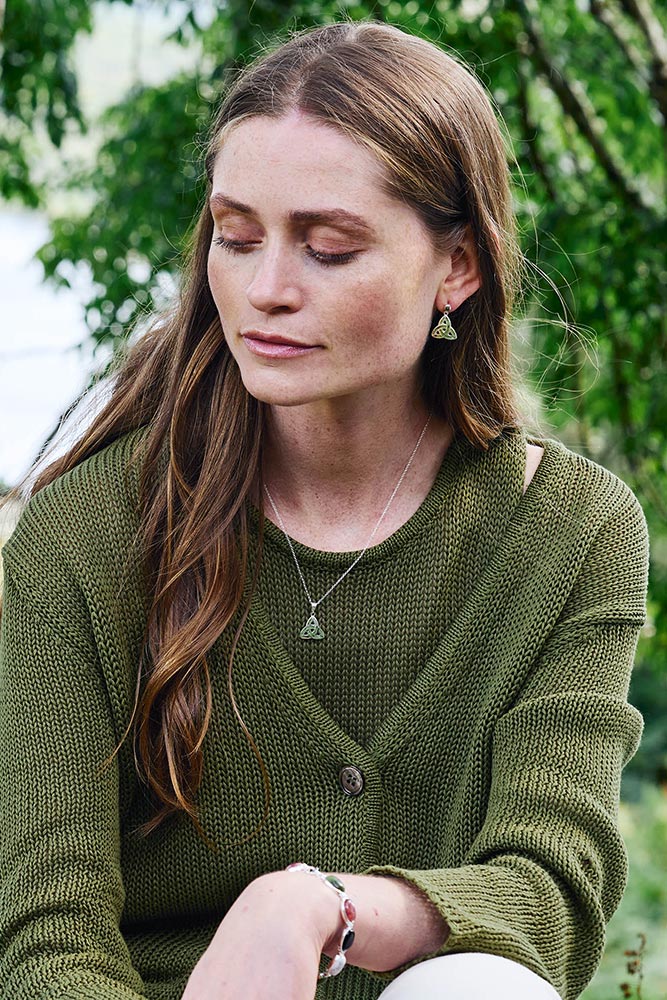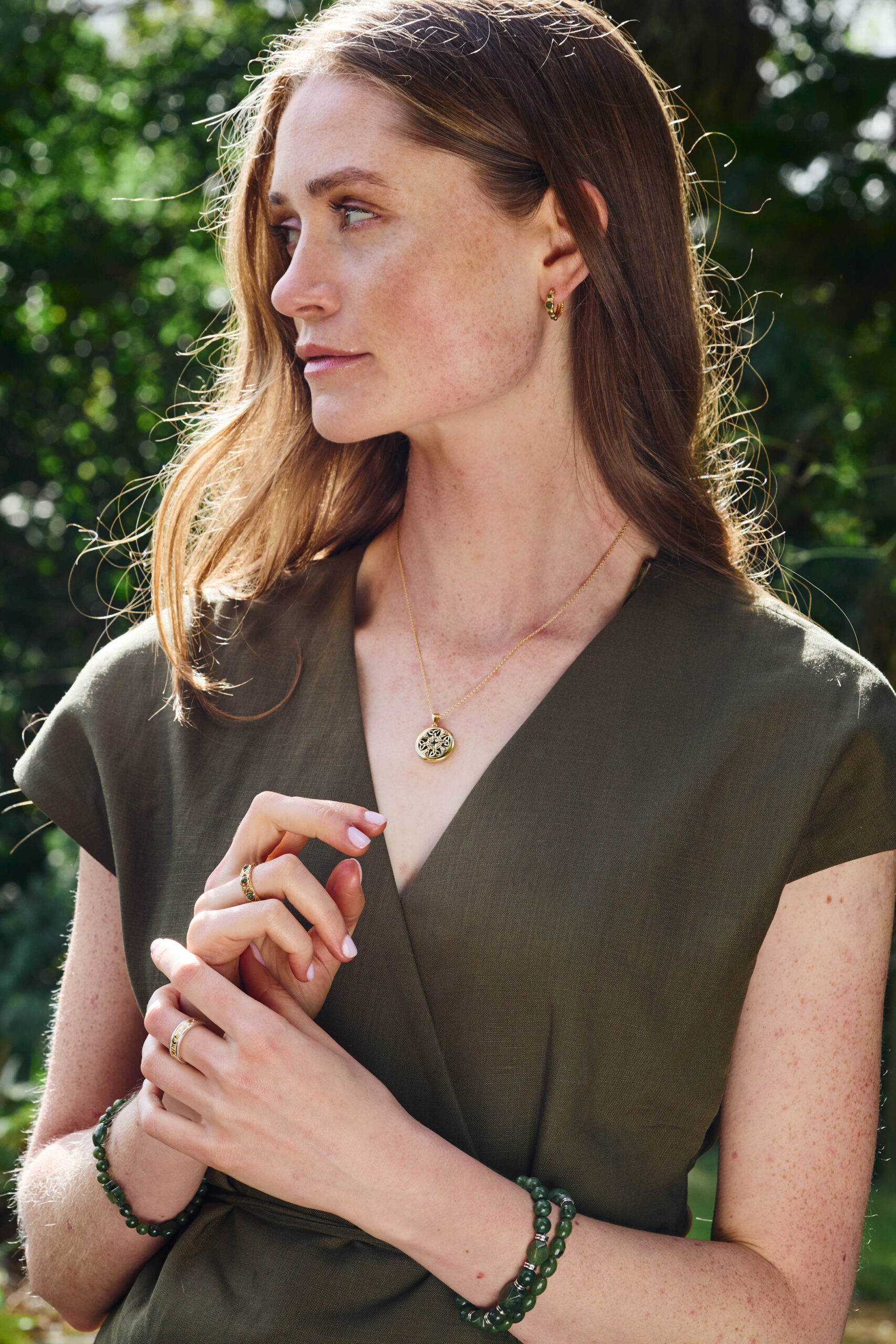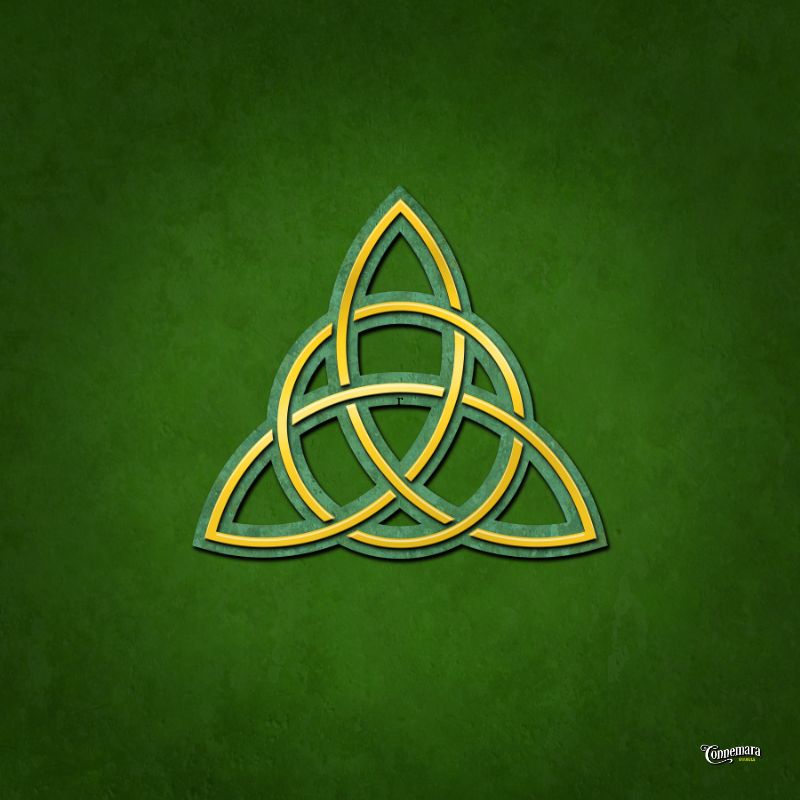
One of the oldest Celtic symbols the Trinity Knot pre-dates the crucifix by hundreds of years. A simple but impressive design weaving in and out of itself with no beginning, no middle, and no end. This ancient symbol reflects ideas of eternity, unity and spiritual connection.
The Trinity represents never ending love. In Irish folklore, knots were believed to bind hearts and souls together. Giving someone a Trinity Knot was like saying: “Our love is eternal and intertwined forever.” It’s one of the reasons the symbol is still so prevalent in jewelry making.
The Holy Trinity – the Father, the Son and the Holy Spirit are also represented by the Trinity. We can see the symbol in our ancient manuscripts and churches. Here in Ireland, we can still see the trinity carved on our Celtic Crosses throughout the Irish countryside such as Muiredach’s High Cross at Monasterboice and Clonmacnoise monastic site to name but a few. It is hard to imagine how the ancient master craftsman carved these intricate symbols using the most primitive of tools.
Today, it continues to inspire jewelry and craftsmanship that celebrate Ireland’s timeless stories.
Ancient Celtic Origins
The Trinity Knot, also known as the Triquetra, is one of the oldest symbols in Celtic art. The name Triquetra comes from the Latin meaning “three-cornered.”
Early Celtic cultures placed great significance on the number three. Throughout Celtic mythology and belief systems, the number appeared again and again, symbolizing natural cycles and balance.
The three points of the Trinity Knot have been interpreted in many ways, often representing ideas such as:
Earth, sea and sky
Life, death and rebirth
Mind, body and spirit
Its continuous looping lines symbolize eternity, reflecting the Celtic belief in the interconnectedness of life.
The Meaning of the Endless Knot
One of the most distinctive features of the Trinity Knot is its continuous, unbroken line. With no clear beginning or end, the design represents eternity and the endless nature of life and love.
Because of this, the Trinity Knot has often been used to symbolize:
Eternal love
Lasting friendship
Spiritual unity
The connection between past, present and future
Its elegant simplicity allows it to hold many meanings, making it one of the most versatile and enduring symbols in Irish tradition.
A Symbol Inspired by the Irish Landscape
Like many ancient Irish symbols, the Trinity Knot is deeply connected to the landscape and culture of Ireland.
In the rugged west of Ireland, in County Galway, nature continues to shape the country’s identity. Here, deep within the mountains of Connemara, lies one of Ireland’s rarest natural treasures: Connemara Marble.
Known as Ireland’s national gemstone, Connemara Marble formed 900 million years ago. Its distinctive shades of green reflect the colours of the surrounding hills, valleys and coastline.
Just as the Trinity Knot symbolizes the interconnectedness of life, Connemara Marble connects jewelry to the land from which it came.
The Trinity Knot in Connemara Marble
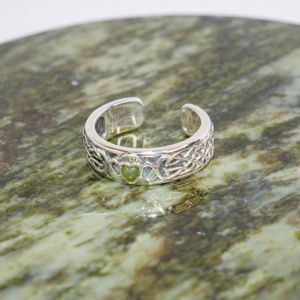
When crafted in Connemara Marble, the Trinity Knot becomes a beautiful meeting of ancient symbolism and natural Irish stone.
Each piece of marble carries its own unique pattern of greens. No two pieces will ever be the same – each as unique as a fingerprint, making every Trinity Knot pendant or piece of jewelry completely unique to you.
The flowing lines of the knot paired with the natural patterns of the marble create a design that reflects both Irish tradition and the beauty of the landscape.
A Timeless Irish Symbol
Today, the Trinity Knot remains one of Ireland’s most meaningful symbols. Its elegant design continues to represent eternity, unity and connection, values that have resonated across generations.
Connemara Marble Trinity Knot jewelry brings this ancient symbol to life in a uniquely Irish way. Combining the simple but impressive design of the Trinity Knot with Ireland’s natural gemstone, each piece carries the story of Irish heritage, craftsmanship and landscape.
Discover the Connemara Marble Trinity Knot collection and carry a symbol of Irish eternity and connection wherever you go.